

LIHTC Stretching & Affordable Housing Financing: How Developers Stretch Every Dollar
Inside Affordable Housing
Affordable housing is one of the most talked about issues in Seattle and across the nation and for good reason. But what many people, even within the industry, don’t see is the complex, behind-the-scenes work required to get these projects financed, approved, and built. At GardnerGlobal, part of our mission is to help our audience understand the real mechanics of development not just the headlines, but the systems that shape impact. (HUD User)
At the heart of most affordable housing development is something called LIHTC — the Low-Income Housing Tax Credit. It’s the federal government’s primary tool for encouraging developers to build housing that’s accessible to families with modest incomes. In short, developers receive tax credits, sell them to investors for equity, and use that money to finance construction.
Policy & program updates
In 2025, there have been meaningful federal changes that affect LIHTC deals — including permanent increases in allocation caps and reductions in bond thresholds for 4% credit deals. These shifts are reshaping how projects are financed and who can get them across the finish line. While they expand access and flexibility, they don’t remove the need for creative financing or careful deal engineering. (Nixon Peabody LLP)
But here’s the challenge: LIHTC equity rarely covers the full cost of a project. Rising construction costs, higher borrowing rates, and market volatility mean LIHTC alone is almost never enough. Developers have to get creative.
That means “stretching” every dollar — layering funding sources such as tax credits, tax-exempt bonds, state and local incentives, HUD programs, grants, philanthropic capital, and sometimes direct developer equity or jointly structured investor vehicles. Even with the 2025 adjustments to LIHTC rules, many deals still require multiple funding streams and rigorous financial problem-solving to meet construction budgets and long-term operating needs. (Northmarq)
It’s financial innovation at the highest level, where creativity directly determines how many families get a place to live.
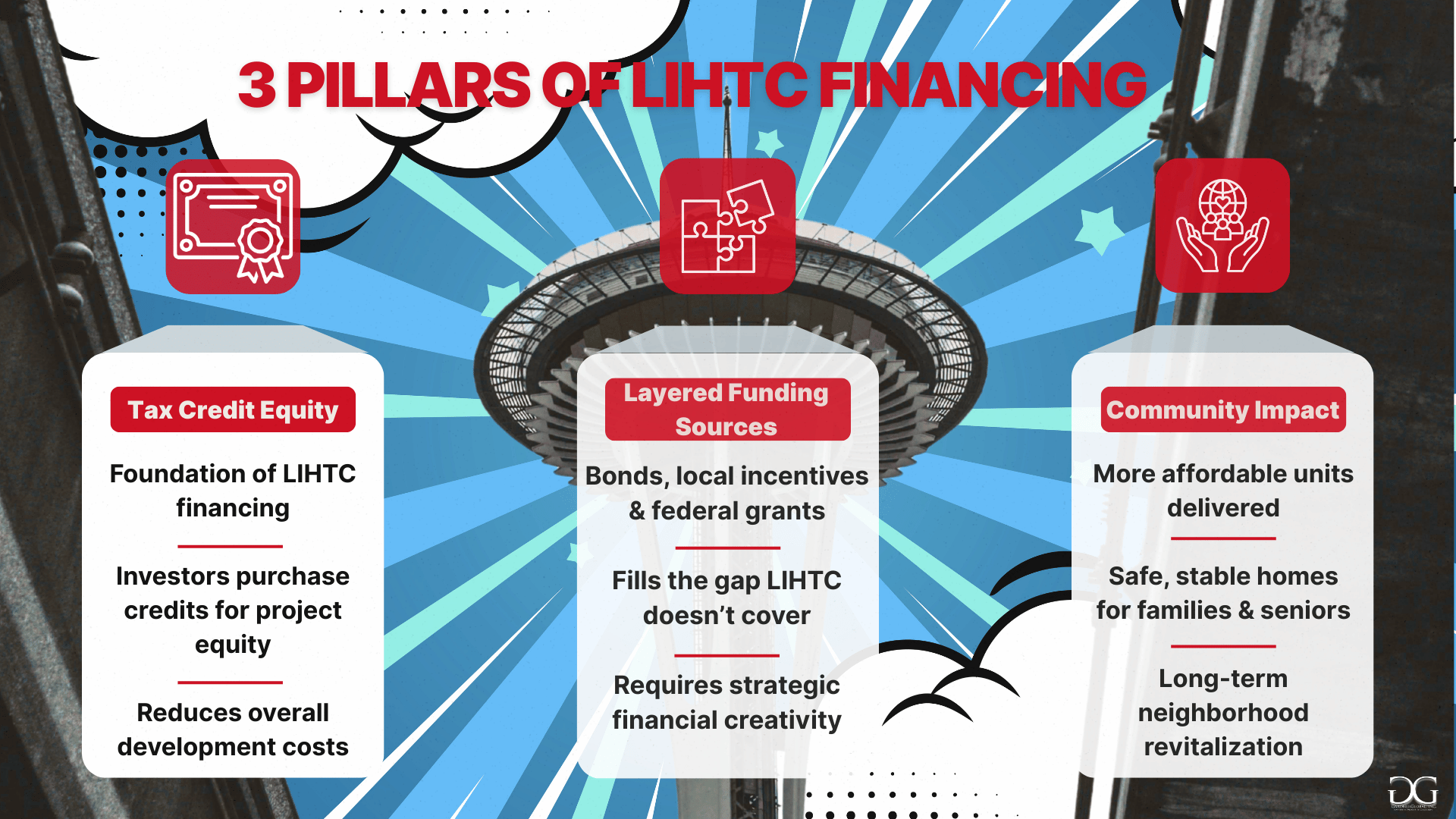
The 3 Pillars of LIHTC Financing
Local Market Context
Seattle has seen a slowdown in new multifamily permits and a tightening pipeline of new apartments in 2024–2025. Fewer new units in the pipeline can increase demand pressure on existing rentals — and this shifting environment changes underwriting math for affordable projects, from market rent assumptions to vacancy projections. That dynamic makes creative, resilient financing even more essential. (Axios)
For Gardner Global, this isn’t just about spreadsheets and funding stacks. Every deal represents families, seniors, and individuals who need safe, stable housing. Stretching LIHTC equity isn’t just technical, it’s human. Every creative solution opens more doors, literally.
That’s why we see affordable housing as a cornerstone of our work. It’s where financial creativity meets real-world impact and where the commitment to community turns into lasting change.
Gardner Global believes creativity in financing translates directly into impact in the community.
If you’re a mission-driven investor, developer, or partner wanting to understand or participate in the next generation of affordable housing, Gardner Global is actively structuring new projects across the Northwest.
Let’s build what communities need next.